

Applying for a job without researching the employer can lead to missed opportunities or even costly mistakes. Taking the time to understand a company helps you decide whether the role aligns with your career goals, work preferences, and long-term growth. It also allows you to tailor your application and confidently answer interview questions about why you want to work there. Beyond interview preparation, company research helps you identify legitimate employers and avoid recruitment scams, which have become increasingly common.
By reviewing official information, employee feedback, recent business updates, and hiring practices, you can make informed career decisions instead of relying solely on a job description. This guide explains how to research a company before applying, including where to find reliable information, how to verify legitimacy, and what to evaluate before moving forward with an application.
1. Start with the Company’s Official Website
A company’s official website is the most reliable place to begin your research. It provides first-hand information about the organisation’s values, business operations, and hiring approach. While marketing content may present the company in its best light, it still offers valuable insights that you can use during the application and interview process.
Read the About Us Page
The About Us page explains why the company exists and what it aims to achieve. Pay attention to the following:
- Mission: Understand the company’s purpose and the problems it solves for customers.
- Vision: See where the business plans to grow in the future.
- Company history: Learn when the company was founded, its major milestones, and how it has evolved.
- Core values: Identify the principles that shape workplace culture and decision-making.
Understanding these details helps you determine whether the company’s values align with your own and provides useful talking points during interviews.
Explore the Careers Page
The careers section often reveals more about the employee experience than the job listing itself. Look for information about:
- Benefits: Health insurance, paid leave, retirement plans, bonuses, or other employee perks.
- Company culture: Teamwork, flexibility, innovation, or community involvement.
- Hiring process: The number of interview stages, assessments, or expected timelines.
- Employee development: Training programmes, certifications, mentoring, or career progression opportunities.
- Diversity initiatives: Inclusion policies, equal opportunity commitments, and workplace accessibility.
These details can help you assess whether the company supports professional growth and fosters a positive work environment.
Understand Products and Services
Before applying, make sure you understand the company’s business model. Research:
- What products or services does the company offer
- Who its target customers are
- Which industries does it serve
- How it positions itself in the market compared to competitors
This knowledge enables you to personalise your CV, craft a stronger cover letter, and convey genuine interest during interviews.
2. Research the Company’s Leadership and Employees
Learning about the people behind a business gives you a better understanding of its structure, culture, and future direction. Professional networking platforms can provide valuable insights that are not always available on the company’s website.
Check LinkedIn
A company’s LinkedIn page can reveal useful information about its growth and hiring trends. Look for:
- Company size
- Employee count
- Leadership team
- Business growth
- Recent hiring activity
- Company updates and announcements
If the company regularly shares achievements, industry insights, or employee success stories, it often indicates an active and engaged workplace.
Review Employee Profiles
Browsing employee profiles can help you understand the type of professionals the company hires. Pay attention to:
- Common career paths
- Skills employees possess
- Typical educational backgrounds
- Internal promotions and career progression
If employees stay with the company for several years and move into senior roles, it may suggest good opportunities for long-term career development.
3. Read Employee Reviews Carefully
Employee review platforms provide a more balanced view of daily life within an organisation. While individual experiences may vary, recurring themes often highlight the company’s strengths and weaknesses.
Useful review platforms include:
- Glassdoor
- Indeed Company Reviews
- Google Reviews (where relevant)
When reading reviews, focus on:
- Management style: Is leadership supportive and transparent?
- Work-life balance: Are employees satisfied with workloads and flexibility?
- Salary satisfaction: Do employees feel compensation is competitive?
- Career growth: Are there opportunities for promotion and skill development?
- Training: Does the company invest in employee learning?
- Recurring complaints: Look for repeated concerns rather than isolated negative comments.
Never judge a company based on a single review. Instead, look for consistent patterns across multiple recent reviews to form a balanced opinion.
4. Check Recent News and Business Updates
Recent news helps you understand the company’s current direction and financial health. It also prepares you for interview discussions about the organisation’s latest achievements or challenges.
Research recent developments such as:
- Product launches
- Funding rounds
- Business expansion
- Industry awards
- Layoffs
- Mergers or acquisitions
- New office openings
- Leadership changes
Reliable sources include:
- Google News
- The company’s official blog
- Press releases
- LinkedIn updates
Mentioning a recent achievement or initiative during an interview demonstrates genuine interest and shows that you have invested time in understanding the business beyond its job advertisement.
5. Research the Company’s Competitors
Comparing a company with its competitors helps you understand its market position and what makes it unique.
Research the following:
- Who the company’s main competitors are
- What products or services differentiate the business
- Its reputation within the industry
- Its competitive advantages
Useful resources include:
- Google Search
- Crunchbase
- Industry publications and trade websites
Knowing the competitive landscape allows you to discuss the company’s strengths confidently during interviews and shows that you understand the broader industry.
How to Check if a Company Is Legit in Pakistan
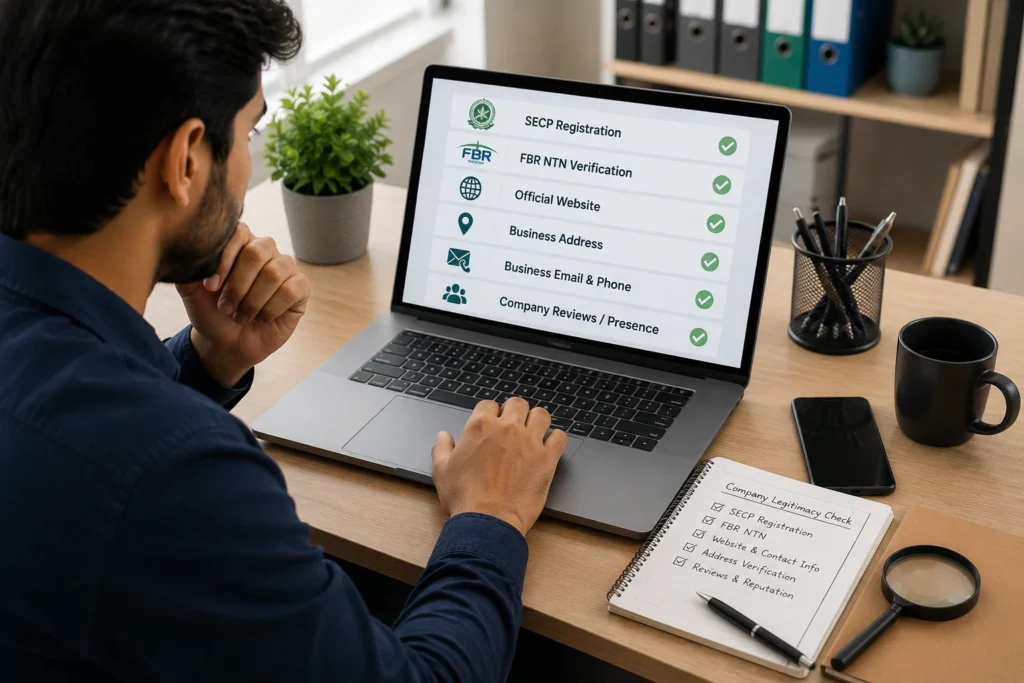
Before applying for any role, especially one advertised online, verify that the employer is genuine. This simple step can protect you from recruitment scams and fraudulent job offers.
Verify Business Registration
Start by checking whether the company is officially registered. Depending on the type of business, you can verify details through:
- The Securities and Exchange Commission of Pakistan (SECP)
- The Federal Board of Revenue (FBR) NTN records, where applicable
Verify Contact Information
A legitimate employer should provide clear and professional contact details, including:
- An official email address using the company’s domain
- A professional website
- A physical office address
- A verified phone number
Look for Scam Warning Signs
Be cautious if an employer:
- Asks for money during the hiring process
- Sends interview invitations from personal email accounts
- Requests banking or sensitive personal information before hiring
- Conducts recruitment only through WhatsApp
- Has no official website
- Has little or no credible online presence
If several of these warning signs appear, verify the company carefully before sharing personal information or accepting an interview invitation.
Company Background Check Before a Job Interview
Preparing for an interview involves more than reviewing the job description. A thorough company background check helps you understand the employer’s priorities and demonstrates that you’ve taken the initiative to learn about the organisation. Interviewers often ask questions to assess your interest in the company, so having accurate and up-to-date information can help you provide thoughtful answers.
Before your interview, research the following:
- Company mission: Understand the organisation’s purpose and long-term goals.
- Latest news: Review recent announcements, product launches, partnerships, or business developments.
- CEO and leadership team: Know who leads the company and any notable leadership changes.
- Products or services: Be familiar with the company’s main offerings and how they serve customers.
- Major clients or industries served: Identify the markets or customer groups the business focuses on.
- Competitors: Learn how the company compares with others in the industry.
- Recent achievements: Look for awards, certifications, or significant milestones.
- Job description: Match your skills and experience to the responsibilities listed in the vacancy.
- Required skills: Prepare examples that demonstrate the key skills the employer is seeking.
Having this information also makes it easier to answer common interview questions such as “Why do you want to work here?” Instead of giving a generic response, you can explain how the company’s values, recent achievements, or career opportunities align with your professional goals.
Questions to Ask About a Company Before Applying
Research should help you decide whether a company is the right fit, not just whether you’re the right fit for the company. Asking the right questions can help you evaluate the work environment, career opportunities, and long-term stability before submitting an application.
Consider these questions during your research or when speaking with a recruiter:
- What does the company value most in its employees?
- How is employee performance measured?
- What training or learning opportunities are available?
- What does career progression look like?
- How does the company support work-life balance?
- What challenges is the company currently facing?
- What qualities do successful employees have?
- How long do employees typically stay with the company?
- Has the company experienced recent growth or restructuring?
The answers can help you determine whether the organisation aligns with your expectations and career objectives.
Things to Check Before Accepting a Job Offer

Receiving a job offer is exciting, but it’s important to evaluate the full package before making a decision. Looking beyond the salary can help you avoid unexpected issues after joining the company.
Before accepting an offer, review the following:
- Salary: Confirm the agreed salary, payment schedule, and any performance bonuses.
- Benefits: Check for health insurance, retirement plans, paid leave, and other employee benefits.
- Probation period: Understand its duration and the conditions for successful completion.
- Working hours: Review standard working hours, overtime expectations, and flexibility.
- Leave policy: Check annual leave, sick leave, public holidays, and other leave entitlements.
- Remote or hybrid work: Clarify whether flexible working arrangements are available.
- Promotion opportunities: Ask about career progression and performance reviews.
- Employment contract: Read all terms carefully before signing.
- Company stability: Consider the organisation’s financial health and long-term prospects.
- Team structure: Understand who you’ll report to and how your team is organised.
Frequently Asked Questions
Spend at least 30 to 60 minutes researching the company. For senior roles or competitive positions, investing more time can help you better understand the business and tailor your application.
Yes. Official social media accounts can provide insights into company culture, workplace events, new projects, and community involvement. Focus on verified accounts rather than unofficial posts.
Absolutely. Understanding the company’s values, products, and requirements allows you to customise your CV and cover letter, making your application more relevant to the role.
Mixed reviews are common. Compare feedback across multiple platforms, focus on recent reviews, and look for recurring themes instead of making a decision based on a few opinions.
Yes. Smaller companies may have less public information, but reviewing their website, LinkedIn page, client portfolio, and online presence can still help you understand their credibility and work environment.