
Finding the right job skills to include on your resume can make a significant difference in today’s competitive job market. Employers look for candidates who combine technical expertise with strong workplace abilities and a willingness to learn new technologies. Whether you’re applying for your first job or updating your resume for a career change, showcasing the right mix of hard skills, soft skills, and AI skills can help you stand out.
In this guide, you’ll learn what job skills are, the different types of skills employers value, and the skills to put on a resume to improve your chances of landing interviews.
What Are Job Skills?
Job skills are the abilities, knowledge, and personal qualities that help someone perform tasks effectively in the workplace. These skills can be learned through education, training, certifications, or practical experience. Employers evaluate job skills because they indicate how well a candidate can contribute to a team, solve problems, and adapt to changing work environments.
Types of Job Skills
Employers generally look for three categories of skills: hard skills, soft skills, and AI and digital skills. A balanced combination of these skills makes your resume more competitive and relevant to modern workplaces.
Hard Skills
Hard skills are technical abilities that are learned through education, training, or hands-on experience. They are often measurable and can be tested during the hiring process.
Some of the most valuable hard skills include:
- Data Analysis
- Microsoft Excel
- Coding (Python, Java, SQL)
- Graphic Design
- Accounting
- Digital Marketing
- Project Management
- AI Literacy
- Cybersecurity
These skills are especially important for roles in IT, finance, engineering, marketing, and other technical fields.
Soft Skills
Soft skills describe how you interact with others and manage your work. Unlike hard skills, they are not tied to a specific profession and are valuable in nearly every industry.
Some of the skills that look good on a resume include:
- Communication
- Teamwork
- Leadership
- Problem Solving
- Critical Thinking
- Time Management
- Adaptability
- Creativity
- Emotional Intelligence
Employers value these skills because they improve collaboration, productivity, and workplace relationships.
AI and Digital Skills
As artificial intelligence becomes part of everyday work, employers increasingly seek candidates who can use AI tools responsibly and efficiently. Including relevant AI skills on your resume can give you a competitive advantage.
Examples include:
- ChatGPT
- Microsoft Copilot
- Google Gemini
- Prompt Writing
- AI Research
- Workflow Automation
- AI Productivity Tools
These skills demonstrate your ability to work with modern technologies, improve efficiency, and adapt to the evolving workplace.
Skills That Look Good on a Resume
Choosing the right skills to put on a resume depends on the position you’re applying for. Employers typically prefer candidates who have a combination of technical expertise and workplace skills. Instead of adding every skill you know, focus on those that match the job description and demonstrate your ability to contribute from day one.
The table below highlights some of the most in-demand job skills and why employers value them.
| Skill | Why Employers Value It |
| Communication | Supports clear collaboration with colleagues and clients. |
| Leadership | Helps manage teams, projects, and workplace responsibilities. |
| Critical Thinking | Improves decision-making and problem-solving. |
| Time Management | Ensures tasks are completed on schedule. |
| AI Literacy | Demonstrates the ability to use modern workplace tools efficiently. |
| Adaptability | Shows you can adjust to changing priorities and technologies. |
| Problem Solving | Helps identify challenges and develop effective solutions. |
| Data Analysis | Enables data-driven business decisions. |
| Teamwork | Encourages collaboration and improves productivity. |
| Customer Service | Builds positive client relationships and customer satisfaction. |
When selecting a list of skills for your resume, prioritize quality over quantity. Recruiters are more interested in relevant skills supported by experience than long lists of generic abilities.
Best Skills to Put on a Resume by Industry
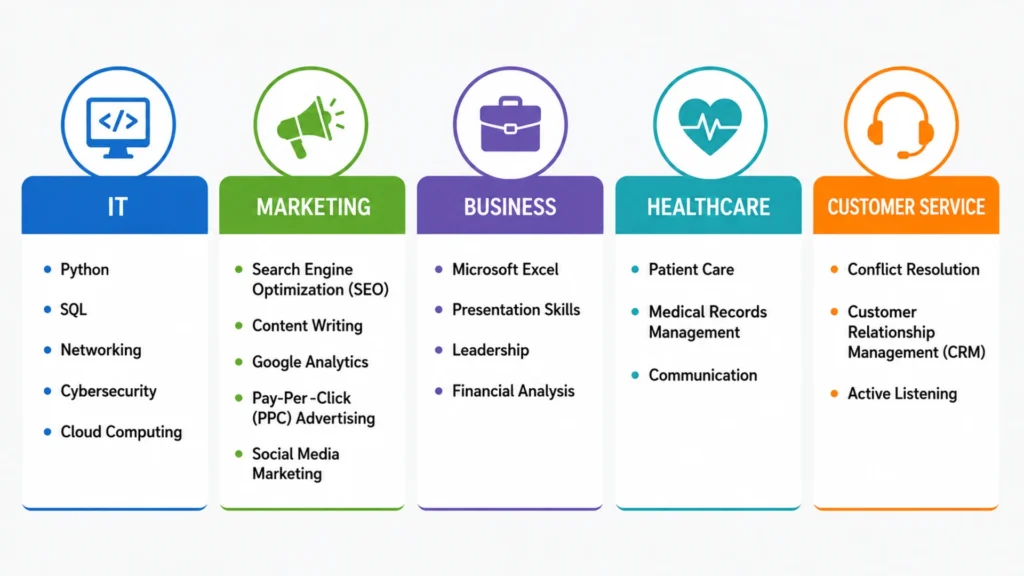
Different industries prioritize different skills. Tailoring your resume to your target role increases your chances of passing Applicant Tracking Systems (ATS) and impressing hiring managers.
1. IT
Technology employers value candidates who can solve technical problems and work with modern systems. Common IT skills include:
- Python
- SQL
- Networking
- Cybersecurity
- Cloud Computing
These technical skills are especially useful for software development, system administration, data analysis, and cybersecurity roles.
2. Marketing
Marketing professionals need both creative and analytical abilities to plan campaigns and measure results. Popular marketing skills include:
- Search Engine Optimization (SEO)
- Content Writing
- Google Analytics
- Pay-Per-Click (PPC) Advertising
- Social Media Marketing
These skills help businesses increase online visibility, generate leads, and improve customer engagement.
3. Business
Business and administrative roles require organizational, analytical, and leadership abilities. Valuable skills include:
- Microsoft Excel
- Presentation Skills
- Leadership
- Financial Analysis
Employers also appreciate candidates who can manage projects, interpret business data, and communicate effectively with stakeholders.
4. Healthcare
Healthcare professionals need technical knowledge along with strong interpersonal abilities. Frequently requested skills include:
- Patient Care
- Medical Records Management
- Communication
Accuracy, empathy, and attention to detail are equally important in healthcare environments.
5. Customer Service
Customer-facing positions require excellent communication and relationship-building skills. Common resume skills include:
- Conflict Resolution
- Customer Relationship Management (CRM)
- Active Listening
These skills and abilities for a resume demonstrate your ability to solve customer issues while maintaining a positive experience.
How to Choose the Right Skills for Your Resume
Adding the right job skills to your resume is just as important as having them. A targeted resume that matches the employer’s requirements is more likely to pass Applicant Tracking Systems (ATS) and attract the hiring manager’s attention.
Here are a few tips to help you choose the most relevant skills:
- Read the job description carefully. Identify the skills the employer mentions most often.
- Match resume keywords. Include the same skills when they accurately reflect your experience.
- Prioritize relevant skills. Focus on abilities that directly relate to the position instead of listing every skill you have.
- Support skills with achievements. Whenever possible, show how you’ve used a skill to deliver results.
- Avoid generic lists. Employers prefer resumes tailored to the role rather than identical applications sent to every company.
Remember, the strongest resumes combine technical expertise with workplace skills and provide evidence of how those skills have been applied.
Resume Ideas for Listing Skills
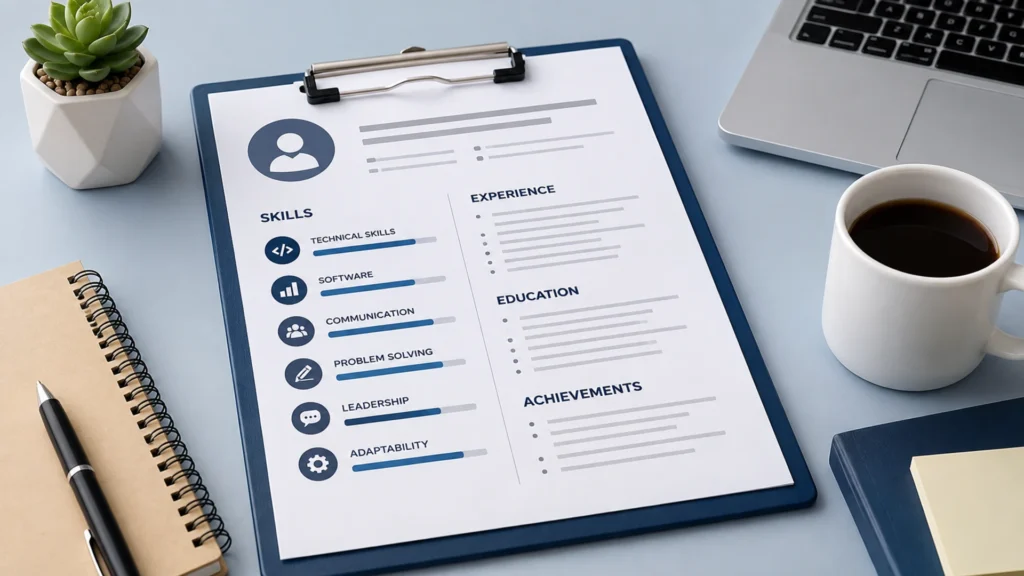
A well-organized resume makes it easier for recruiters to identify your strengths. There are two effective ways to showcase your skills.
Create a Dedicated Skills Section
Include a separate section near the top or middle of your resume where recruiters can quickly scan your qualifications.
Example
Skills
- Communication
- Microsoft Excel
- Data Analysis
- Python
- Teamwork
This format works well for ATS because it clearly highlights relevant keywords.
Include Skills in Your Work Experience
Instead of only listing skills, demonstrate how you’ve used them in previous roles.
Example: Used Microsoft Excel and Power BI to analyze monthly sales data, improving reporting efficiency and supporting better business decisions.
This approach is stronger because it provides context and measurable evidence of your abilities. Employers are more likely to trust skills that are backed by real accomplishments than those listed without examples.
Frequently Asked Questions
Yes, if they are relevant to the job. Mention them only if you have a basic working knowledge, and be honest about your proficiency during interviews.
Yes. Tailoring your skills section to match each job description improves ATS compatibility and shows employers you’re a good fit for the specific role.
Beginner skills are acceptable for entry-level positions, internships, or graduate roles. Focus on skills that support the job requirements and show your willingness to learn.
Most candidates place it below the professional summary or after work experience. Choose a layout that makes your most relevant skills easy for recruiters to find.
Review your resume every few months or before applying for a new position. Add newly acquired skills, certifications, or software knowledge to keep your resume current and competitive.