

Most of us start the workday with a plan and lose it within the first hour. An email pulls your attention one way, a notification pulls it another, and by lunchtime, you can barely remember what you set out to do. This is where mindfulness at work makes a real difference. Understanding how to practice mindfulness at work doesn’t require major changes.
Small daily habits can help you stay focused, manage stress, and work with greater clarity. Even a few minutes of intentional focus can lower stress, sharpen concentration, and help you get through the day without feeling scattered.
This guide walks through what mindfulness at work actually means, why it matters, and how to build it into your day with simple, realistic habits, not another item on your to-do list.
What Is Mindfulness at Work?
Mindfulness at work means paying full attention to your current task, thoughts, and surroundings without unnecessary distractions or judgment. It helps you stay focused, manage stress, and make clearer decisions throughout the day.
In practice, this looks like:
- Noticing when your mind has drifted and gently bringing it back
- Staying with one task instead of switching between five
- Paying attention to how you feel physically and mentally as you work
- Responding to situations instead of reacting on autopilot
At its core, workplace mindfulness is about paying attention to the present moment instead of operating on autopilot. This simple shift can improve focus, reduce unnecessary stress, and make everyday work feel more manageable.
Why Mindfulness Matters in the Workplace
Modern workplaces are filled with constant interruptions, making it difficult to stay focused. Research has shown that regular mindfulness practices can improve attention, emotional regulation, and resilience, helping employees manage workplace demands more effectively.
Bringing mindfulness into your routine tends to support:
- Sharper focus during demanding tasks
- Lower stress levels across the day
- Better teamwork and fewer misunderstandings
- Sounder decision-making under pressure
- Clearer communication with colleagues
- A noticeable dip in burnout over time
None of this requires an hour-long practice. Most people notice a shift after just a few minutes of consistent effort.
Benefits of Mindfulness at Work
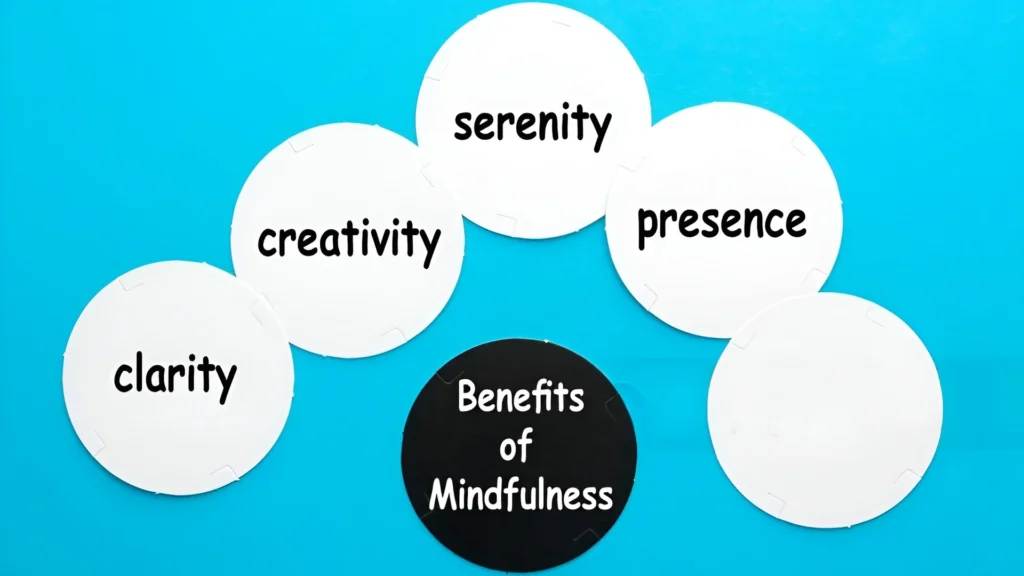
The benefits of mindfulness at work show up in both how you feel and how you perform. Research on mindfulness and workplace performance, including studies published in organizational psychology journals, points to measurable gains in attention and emotional regulation among employees who practice it regularly.
Common benefits include:
- Improved concentration: Mindfulness helps reduce mental distractions, allowing you to stay focused on one task for longer periods. This can improve the quality of your work while reducing unnecessary mistakes.
- Reduced everyday anxiety: Taking mindful pauses during the day helps calm racing thoughts and lowers stress before it builds up. Even a few minutes of focused breathing can create a greater sense of control during busy workdays.
- Better emotional regulation: Practicing mindfulness makes it easier to recognize emotions without reacting immediately. This can lead to calmer conversations, fewer workplace conflicts, and more thoughtful decisions.
- More creative problem-solving: A clear and focused mind is often better at finding solutions. Mindfulness creates mental space for new ideas instead of becoming overwhelmed by pressure.
- Steadier productivity: Rather than constantly switching between tasks, mindfulness encourages sustained attention, helping you complete work more efficiently throughout the day.
- Stronger collaboration: Being fully present during conversations improves listening, reduces misunderstandings, and helps build stronger relationships with colleagues.
- Healthier work-life balance: Mindfulness encourages employees to recognize when they need a break, set healthier boundaries, and transition more effectively between work and personal time.
Research published in journals such as the Journal of Occupational Health Psychology has linked mindfulness practices with improved emotional regulation, reduced stress, and better workplace performance. Consistent mindfulness habits may also contribute to greater resilience and overall employee well-being over time.
Mindfulness vs Meditation at Work
People often use these terms interchangeably, but mindfulness vs meditation at work actually comes down to timing and structure.
| Mindfulness | Meditation |
| Can be practiced anytime | Usually needs a dedicated time slot |
| Happens during work | Typically done before or after work |
| Centered on present-moment awareness | A more structured mental exercise |
| Easy for beginners to start | Benefits from a consistent routine |
Neither approach is better than the other. Meditation helps strengthen mindfulness over time, while mindfulness allows you to apply that awareness during meetings, emails, conversations, and everyday tasks.
How to Practice Mindfulness at Work
This is where the habits actually come together. None of these takes more than a few minutes, and you don’t need to do all of them at once.
1. Start Your Workday With One Minute of Deep Breathing
Before opening your inbox, take sixty seconds to breathe slowly and deliberately. It signals to your brain that you’re choosing how the day starts, rather than letting the first notification do it for you.
2. Focus on One Task at a Time
Multitasking feels productive, but it usually just splits your attention across several half-finished tasks. Picking one task and staying with it until a natural stopping point tends to get more done, faster, and with fewer mistakes.
3. Take Mindful Breaks
Short breaks reset your focus far better than scrolling on your phone. Try:
- A short walk, even just down the hallway
- A few minutes of stretching at your desk
- Looking away from the screen and resting your eyes
4. Practice Mindful Listening During Meetings
Instead of mentally drafting your response while someone else is talking, try actually listening to what they’re saying. It improves workplace communication and usually makes meetings shorter, not longer.
5. Be Present While Writing Emails
Pause for a moment before hitting send. It gives you a chance to reread the tone of the message and catch anything that might land the wrong way.
6. Use Breathing Techniques During Stressful Moments
A simple 4-4 breathing pattern, four seconds in and four seconds out, can calm a racing mind in under a minute. It’s one of the quickest ways to interrupt a stress spiral before it builds.
7. Reduce Digital Distractions
Notifications, an open phone, and a dozen browser tabs all compete for the same limited attention. Turning off what you don’t need, even for an hour, protects the kind of deep work that actually moves projects forward.
8. End Your Workday With Reflection
Before logging off, ask yourself three questions:
- What went well today?
- What did I learn?
- What deserves my attention tomorrow?
This small habit closes the day with intention instead of just letting it trail off.
How to Stay Present at Work During Busy Days

Knowing how to stay present at work during busy days matters more than having a plan for a calm one. Try:
- Time blocking your calendar around your most demanding tasks
- Taking short breathing pauses between meetings
- Making mindful transitions between tasks instead of jumping straight in
- Sticking to single-tasking, even when things feel urgent
- Staying hydrated, since dehydration quietly affects focus
- Building in short bursts of movement between long stretches of sitting
Common Mistakes When Practicing Mindfulness at Work
A few habits tend to undercut mindfulness before it has a chance to work:
- Expecting instant results after a single session
- Trying to clear every thought instead of just noticing them
- Multitasking while attempting to be mindful
- Practicing inconsistently, then giving up
- Only turning to mindfulness once stress has already peaked
Building resilience through mindfulness works best as a steady habit, not an emergency response.
Quick 5-Minute Workplace Mindfulness Routine
If you only have five minutes, here’s a routine that fits almost anywhere:
- Minute 1: Deep, slow breathing
- Minute 2: Observe your surroundings without judgment
- Minute 3: Relax your shoulders and jaw
- Minute 4: Set one clear intention for the next task
- Minute 5: Begin focused work
This short sequence works well before a big meeting, after a stressful call, or any time your concentration starts to slip.
Frequently Asked Questions
Not exactly. Meditation is a dedicated practice that usually takes place before or after work, while mindfulness involves paying attention to the present moment during everyday tasks. You can practice mindfulness while answering emails, participating in meetings, completing projects, or even taking short breaks during your workday.
Even one to five minutes of mindfulness can make a noticeable difference when practiced consistently. Short breathing exercises, mindful breaks, or a few moments of focused attention throughout the day are often enough to reduce stress and improve concentration without disrupting your work schedule.
Yes, mainly by reducing the mental clutter that comes from multitasking and constant distractions, which frees up attention for the task actually in front of you.
Yes. Mindfulness supports productivity by reducing distractions, limiting multitasking, and helping you stay focused on one task at a time. Working with greater attention often improves efficiency while reducing unnecessary mistakes and mental fatigue.
Absolutely. Remote and hybrid employees can benefit from mindfulness by creating distraction-free workspaces, scheduling mindful breaks, and taking short pauses between virtual meetings. These habits help maintain focus and reduce digital fatigue throughout the day.