
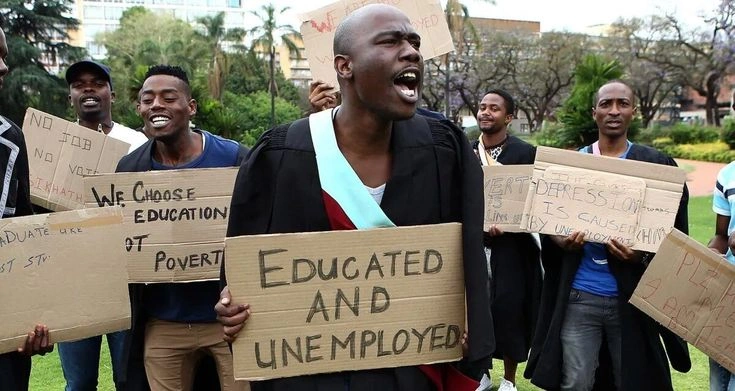
A degree used to mean something specific. Graduate, apply, get hired. That was the unspoken deal, but understood for decades. Nobody really questioned it.
That deal is gone now.
Thirty-one per cent of young people globally are unemployed, and a good chunk of them have diplomas sitting in frames on their bedroom walls. This isn’t a story about education completely collapsing. It’s more uncomfortable than that.
The job market quietly changed shape while universities kept doing what they’d always done, taking tuition, running lectures, handing out certificates, and the two worlds just slowly stopped matching up.
What Is the Graduate Unemployment Crisis?
On paper, graduate unemployment means degree holders who can’t find work. But the numbers alone miss the uglier reality underneath them.
The more honest picture is the business graduate working at a supermarket till. The communications major is on their third unpaid internship. The engineering student is doing delivery shifts because the firm that promised them a role froze hiring three weeks before they were supposed to start.
That’s underemployment, technically employed, practically adrift, and it’s at least as common as outright unemployment among young graduates right now.
Key Facts Worth Knowing
- Youth unemployment runs significantly higher than adult rates, pretty much everywhere you look.
- Employers keep saying graduates arrive without enough practical ability
- Automation and economic instability are shrinking the traditional entry-level pool
- More graduates are turning to freelance work because stable employment isn’t materialising
- The digital economy is rewriting what “employable” even means
Why Are Graduates Struggling?
1. The Skills Gap Nobody Warned Them About
Universities teach theory. There’s genuine value in that. But companies don’t need someone who can write an essay on organisational behaviour; they need someone who can run a project, communicate clearly under pressure, and figure out an unfamiliar software tool without a three-week onboarding course.
That disconnect has existed for years. What’s changed is how little patience employers now have for it. Margins are tighter. Training budgets have shrunk. The expectation, increasingly, is that graduates arrive ready to contribute.
What’s actually missing when graduates show up:
- Ability to communicate and present ideas clearly
- Real critical thinking, not exam-style, but messy, real-world problem solving
- Comfort with technical tools and digital platforms
- Any meaningful understanding of AI and how it’s already reshaping work
- Project management and the ability to see something through
- Experience working inside a team where things go wrong
2. Too Many Graduates Chasing Too Few Roles
Business, Media, and Arts degrees. Enrollment in these programs climbed for decades, and nobody at the front of the lecture hall was particularly honest about what the other end looked like.
The job market didn’t keep pace. Thousands of near-identical candidates now compete for a shrinking set of roles while cybersecurity teams post vacancies they can’t fill, and healthcare providers are desperate for qualified people. The problem isn’t education itself. It’s that students were rarely told where demand actually sits, and universities had every incentive to keep enrollment high regardless.
Fields where competition has become brutal:
- Traditional office and admin work
- Journalism and print media
- General marketing
- Basic customer support
- Non-technical business roles
3. The Experience Trap
Here’s the one graduates find most maddening, and fairly so: employers want experienced people for jobs specifically designed to give people their first experience. It’s circular, everyone knows it, and knowing doesn’t make it any less of a wall to climb.
Internships and portfolio work have quietly become the actual hiring criteria. A degree tells a recruiter you can study. Experience tells them you can function professionally. Without the second thing, impressive transcripts get skipped over.
This shift happened gradually, then all at once. Companies cut training budgets. Economic uncertainty made every hire feel riskier. The expectation moved upstream into the years before graduation, and a lot of students weren’t told in time.
4. AI Is Changing the Entry-Level Floor

The jobs that automation is eating first are exactly the ones graduates used to walk into. Data entry. Basic admin. Routine customer queries. Entry-level report processing. These weren’t glamorous, but they were how a lot of people got their footing professionally. That pathway is narrowing.
What’s actually becoming more valuable:
- Understanding how AI tools work and where they fail
- Reading and interpreting data, not just collecting it
- Creativity and original thinking
- Emotional intelligence and human judgment
- Strategic reasoning
- Comfort adapting to new systems quickly
5. Hiring Freezes and Economic Headwinds
Inflation. Recession fears. Rising costs across almost every sector. When businesses feel squeezed, recruitment is one of the first things that contracts. Graduate programs get quietly shelved. Entry-level roles disappear from job boards. The people who do get hired are the ones with a track record, which brings us back, again, to the experience problem.
This isn’t a brief blip. Economic uncertainty has become something of a permanent condition, and companies have adapted their hiring behaviour accordingly. They want less risk. New graduates, by definition, represent a known unknown.
Economic pressures are driving reduced hiring:
- Persistent inflation is affecting business margins
- Reduced investment and growth activity
- Hiring freezes are becoming routine rather than exceptional
- Corporate restructuring, cutting junior headcount
- Broader global market instability
Industries Hit Hardest And Where Opportunity Still Exists
- Media and Journalism: Digital disruption has hollowed out traditional publishing. Smaller teams, more automation, heavier reliance on freelancers.
- Administration and Clerical Work: Software handles a lot of what junior office workers used to do. That floor has dropped considerably.
- Customer Support: Chatbots and automated systems now absorb the volume that once required rooms full of people.
- Traditional Marketing: Basic marketing theory isn’t enough anymore. Employers want analytics, digital strategy, and familiarity with AI-driven tools.
- Entry-Level IT: Competitive and increasingly affected by outsourcing and automation.
Where Demand Is Actually Growing
- Cybersecurity
- Healthcare and health technology
- AI development and operations
- Data analytics
- Renewable energy
- Software engineering
- Skilled trades
- Cloud computing
- Digital marketing
- E-commerce management
Graduates who point themselves toward these areas, even if it means extra learning outside their degree, tend to find a different job market waiting for them.
The Hidden Problem: Underemployment
Unemployment figures only capture part of the damage. Underemployment, being in work that doesn’t use your qualification, is widespread and gets far less attention than it deserves.
A philosophy graduate working in retail isn’t unemployed. They don’t show up in the headline statistics. But they’re not building a career, not paying off their student loans at any meaningful pace, and probably not in great shape mentally either. Multiply that across millions of young people, and the real cost of this crisis becomes clearer.
What underemployment tends to produce over time:
- Permanently lower earnings compared to peers who got early career traction
- Delayed financial independence, saving, investing, and buying a home
- Stunted professional development, which makes the problem self-perpetuating
- Mental health strain
- A creeping sense that the degree wasn’t worth it
What Employers Actually Want in 2026
1. Technical Skills That Matter
The list shifts, but the direction is consistent: digital fluency, data literacy, and comfort with tools that didn’t exist five years ago.
- AI literacy and practical tool use
- Data analysis and interpretation
- Cybersecurity basics
- Cloud platforms
- Digital marketing and analytics
- Coding (at least at a functional level)
- SEO and performance tracking
- UI/UX thinking
- Automation tools
- E-commerce operations
2. Soft Skills That Can’t Be Automated
Automation is genuinely useful for repetitive, rule-based tasks. It’s not usefulfort navigating a difficult client conversation, rallying a demoralised team, or making a judgment call in ambiguous circumstances. Those remain human jobs, and employers know it.
- Clear, confident communication
- Leadership — even at junior level
- Adaptability when plans change
- Problem-solving under pressure
- Emotional intelligence
- Team collaboration (especially remote)
- Original thinking
- Time management without hand-holding
Candidates who show up with strong interpersonal ability often outperform candidates with stronger CVs but weaker people skills. That’s been true for a while. It’s getting more true.
3. Real Experience Over Perfect Grades
Most hiring managers, given the choice between a 2:1 with a strong portfolio and a First with nothing to show, will pick the portfolio. Grades confirm what someone learned in an exam room. A body of work confirms what they can actually produce.
Ways to build that experience while still studying — or after:
- Internships (paid or unpaid, though push for paid)
- Freelance projects, even small ones
- Volunteer work in relevant areas
- Industry certifications
- Competitions and hackathons
- Networking events that lead somewhere
- Remote project collaboration
- Building something public-facing
How Graduates Can Actually Improve Their Prospects
- Build skills: online courses, certifications, side projects. The format matters less than whether the skill is genuinely in demand.
- Build a portfolio: real projects, real outputs, real results. Not a list of modules passed.
- Get internship experience: It’s not fair that it’s become compulsory. Do it anyway.
- Learn to Use AI: This isn’t optional advice for the enthusiastic; it’s baseline career survival for the next decade.
- Look beyond Local Jobs: Remote work has opened up access to employers who aren’t in your city or your country. Use that.
What Governments and Universities Need to Change
Individual effort can only go so far when the structural problems are this deep.
1. Education Reform: Courses designed twenty years ago for a job market that no longer exists are producing graduates who arrive underprepared. That’s an institutional failure, not a personal one.
2. Industry Partnerships: Not token advisory boards, but actual collaboration on what skills are needed and how to teach them.
3. Vocational Training: A university degree is not the only path to a stable career, and educational systems that pretend otherwise are misleading a generation of young people.
4. Career counselling: Students deserve accurate labour market information before they commit to four years and significant debt.
5. Digital Economy Preparation: Not as a separate module. As a baseline assumption across every subject.
Will It Get Better?
Honestly uncertain. But not hopeless.
The same technology that’s eliminating entry-level roles is also creating new ones. AI, cybersecurity, health tech, renewable energy, and digital commerce are genuinely growing sectors that are short of skilled people.
Where the workforce is heading:
- Remote and hybrid as defaults, not exceptions
- AI is embedded in almost every professional role
- Project-based and portfolio careers are replacing linear paths
- Hybrid skills, technical and human at a premium
- Digital industries are continuing to expand
- Continuous learning is a permanent professional requirement
The workforce ahead rewards people who can adapt. A static qualification, however impressive, won’t be enough on its own. It probably never should have been.
Final Thoughts
The graduate unemployment crisis isn’t really about degrees being worthless. It’s about a system that kept selling the same product while the market quietly moved on.
Economic pressure, automation, and a persistent mismatch between what universities teach and what employers actually need have made the transition from study to work genuinely harder than it was a generation ago. The mental health costs, the underemployment, the financial pressure, these are real, and they’re widespread.
But the picture isn’t purely bleak. Graduates willing to keep building skills, gain real experience, and engage honestly with where the economy is going will find opportunities that aren’t available to those waiting for the old system to start working again.